
 Free Samples

 Super-Fast Delivery
 Excellent Reviews


What Makes Premium Artificial Grass Different?
Premium artificial grass differs from standard products through its materials, fibre construction, density, durability and overall performance. These factors can affect how realistic the grass looks, how comfortable it feels underfoot and how well it handles daily use.
Many buyers compare artificial grass by price first. That makes sense, but cost alone rarely tells the full story. Two products may look similar in a small online image while performing very differently once installed in a real garden.
That matters whether you are building a family garden, upgrading a front lawn or planning a pet-friendly outdoor space. A lower-cost product may suit some projects perfectly well. In other cases, paying more for premium artificial grass can improve comfort, appearance and long-term performance.
In this guide, we explain what actually separates premium artificial grass from budget and standard alternatives, what specifications matter most, and how to compare products with more confidence.
What Is Premium Artificial Grass?

Premium artificial grass is typically manufactured using higher-quality yarns, improved fibre technology and denser construction to deliver better appearance and performance.
The first thing worth understanding is that “premium” is not a regulated industry term. There is no universal standard that automatically makes one product premium and another budget. Different suppliers may use the label differently.
That means buyers need to look beyond marketing language and focus on specifications.
A premium product will often offer improvements in areas such as:
-
Fibre softness and resilience
-
Density and stitch rate
-
Colour variation
-
Thatch layers
-
Backing construction
-
Drainage performance
-
UV stability
-
Overall realism
For example, a family garden used daily by children and dogs will usually need more than attractive fibres alone. It also needs good recovery, strong backing and reliable drainage to help the surface cope with repeated use.
If you are comparing options, it helps to explore different types of artificial grass side by side rather than relying on price or product names alone.
How Premium Artificial Grass Differs From Standard Products
Premium artificial grass usually offers improvements in materials, manufacturing consistency and real-world performance.
Here is a practical comparison.
|
Feature |
Budget Grass |
Mid-Range Grass |
Premium Grass |
|
Fibre softness |
Often coarse |
Moderate |
Usually softer |
|
Density |
Lower |
Moderate |
Higher |
|
Colour variation |
Limited |
Better |
More natural blends |
|
Recovery |
Flattens more easily |
Moderate |
Better rebound |
|
Backing |
Basic |
Improved |
More robust |
|
Drainage |
Variable |
Good |
Often optimised |
|
Appearance |
More artificial |
Natural enough |
Highly realistic |
Material Composition
Budget products often prioritise low manufacturing cost. Premium products typically use better yarn engineering and more refined fibre blends.
This can improve:
-
softness
-
durability
-
resilience
-
visual realism
Manufacturing Standards
Manufacturing quality affects consistency.
Poorly made artificial grass may show:
-
uneven tuft spacing
-
inconsistent pile height
-
weaker backing adhesion
-
reduced fibre recovery
Higher-quality manufacturing helps create a more consistent finish across the full roll.
Product Performance
Performance matters more than first impressions.
Ask how the product performs after:
-
regular foot traffic
-
wet weather
-
pet use
-
furniture pressure
-
repeated brushing
A product that looks good on day one but quickly flattens may not offer long-term value.
Why Material Quality Matters In Artificial Grass
Material quality affects softness, resilience and wear performance.
This is one of the biggest differences between premium and lower-grade grass.
Polyethylene, Polypropylene And Other Materials
Artificial grass fibres are commonly made from synthetic polymers.
Common examples include:
Polyethylene (PE) - Often chosen for softness and a more natural feel.
Polypropylene (PP) - Often used in lower-cost products or secondary fibres. It can be firmer.
Some products use blended materials to balance:
-
comfort
-
durability
-
structure
Material choice alone does not define quality. Fibre thickness, yarn design and manufacturing standards matter too.
Fibre Recovery And Resilience
Recovery refers to how well fibres return upright after being compressed.
Good recovery matters when grass regularly experiences:
-
foot traffic
-
garden furniture
-
children playing
-
pets running
Higher-quality fibres often recover better after brushing.
Wear Performance
Artificial grass does not wear evenly in every garden.
High-traffic areas include:
-
pathways
-
football spots
-
play areas
-
near doors
-
around seating
When comparing suppliers, ask:
-
What fibre materials are used?
-
How dense is the product?
-
How does it recover after compression?
-
What backing supports the yarn?
These questions reveal more than price alone.
Understanding Pile Height, Density And Fibre Structure
Pile height, density and fibre structure work together to shape how artificial grass looks and performs.
Many buyers focus heavily on pile height. That is understandable, but it can be misleading.
What Is Pile Height?
Pile height refers to the length of the visible grass fibres, usually measured in millimetres.
Shorter piles often suit:
-
balconies
-
display areas
-
sports surfaces
-
high-traffic zones
Longer piles may feel softer and more luxurious underfoot.
What Density Means
Density refers to how tightly fibres are packed.
Higher density often means:
-
fuller appearance
-
better cushioning
-
reduced visible backing
-
improved resilience
This is one of the strongest indicators of quality.
Why Fibre Shape Matters
Modern yarn technology uses different fibre shapes to improve performance.
Shapes can influence:
-
light reflection
-
softness
-
recovery
-
realism
Some fibre designs help blades remain more upright under repeated pressure.
Why Density Often Matters More Than Height
This is where many buyers get caught out.
A long pile can sound impressive, but height alone does not guarantee quality.
A tall, low-density product may:
-
flatten quickly
-
expose backing
-
appear less realistic over time
Meanwhile, a slightly shorter but denser product may perform far better.
This is why density often matters more than pile height alone.
For a deeper comparison, see our guide to choosing artificial grass.
How Premium Artificial Grass Creates A More Natural Appearance

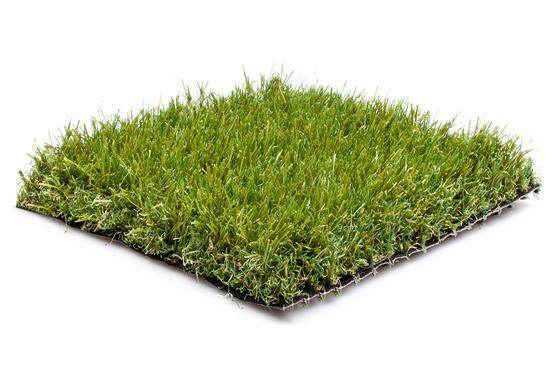
Premium artificial grass usually looks more realistic because it combines colour variation, thatch layers and improved fibre blending.
Appearance is about more than green fibres.
Colour Variation
Real grass is not one flat colour.
Higher-quality products often blend:
-
olive greens
-
darker greens
-
lighter tones
-
brown or beige fibres
This creates visual depth.
Thatch Layers
Thatch refers to shorter curled fibres near the base.
These fibres mimic the dried material found in natural lawns.
Thatch helps:
-
improve realism
-
support upright blades
-
hide backing
Fibre Blending
Multiple yarn types can improve texture and visual variation.
This often creates a more convincing finish.
Realistic Texture
Premium grass often feels less plastic-like.
This matters especially in visible areas such as front gardens, where kerb appeal matters more.
A play garden may prioritise softness and resilience. A front lawn may prioritise realism first.
UV Protection And Long-Term Colour Performance
UV protection helps artificial grass retain colour during prolonged sun exposure.
Sunlight gradually affects many outdoor materials.
Artificial grass designed with UV stabilisation may offer better colour retention over time.
Why UV Protection Matters
Without suitable UV protection, fibres may fade faster.
This can affect:
-
appearance
-
colour consistency
-
perceived quality
What Buyers Should Look For
Ask suppliers:
-
Is the product UV stabilised?
-
Is UV performance discussed clearly?
-
Can samples be compared outdoors?
Comparing samples outside often gives a more realistic view than indoor lighting.
Factors Affecting Colour Retention
Colour retention may depend on:
-
sunlight exposure
-
local climate
-
maintenance
-
fibre quality
South-facing gardens may experience more intense exposure.
Why Drainage Performance Is Important
Good drainage helps artificial grass remain practical in wet weather, pet-friendly spaces and everyday family gardens.
Drainage is often overlooked during product comparison.
Drainage Hole Design
Water usually drains through perforations in the backing.
Backing design affects how efficiently water can pass through the surface.
Everyday Garden Use
Poor drainage can contribute to:
-
standing water
-
slower drying
-
dirt build-up
In the UK climate, this matters. Our guide to heavy rain and artificial grass explains how drainage performance depends on both the backing and the sub-base below it.
Pet-Friendly Applications
If pets are a major consideration, artificial grass for dogs where drainage, cleaning routines and odour management is required, should be at the top of your list.
Better drainage can help with:
-
rinsing
-
cleaning
-
odour management
However, drainage depends on more than the grass itself.
The sub-base, aggregate choice and installation quality matter just as much. Even expensive grass can underperform on a poorly prepared base.
If wet-weather performance matters, Tuda’s article on heavy rain and artificial grass offers useful context.
How Premium Artificial Grass Improves Comfort Underfoot
Premium artificial grass often feels softer and more supportive underfoot.
Comfort matters more than many buyers expect.
Fibre Softness
Higher-quality fibres can reduce the coarse plastic feel associated with cheaper products.
This may improve comfort for:
-
barefoot use
-
children
-
pets
Cushioning
Dense fibres and supportive installation layers can improve cushioning.
Shock absorption may feel better during regular use.
Family And Pet Applications
Comfort becomes more important when the lawn functions as a daily living space rather than simple decoration.
Durability Benefits Of High-Quality Artificial Grass
High-quality artificial grass is usually designed to cope better with repeated use.
Durability is not just about avoiding visible damage.
It also affects how well grass keeps its shape and appearance.
Traffic Resistance
Busy gardens place constant pressure on fibres.
Premium products often handle traffic better.
Fibre Recovery
Recovery affects whether flattened zones remain visible.
Higher-quality fibres typically recover more effectively with brushing.
Long-Term Appearance
A lawn that retains structure tends to look better for longer.
That can improve perceived value over time.
Pet And Child-Friendly Features In Premium Artificial Grass
Premium artificial grass can offer practical benefits for gardens used by children and pets.
No artificial grass is universally perfect for every household, so suitability should always be assessed case by case.
Comfort
Soft fibres may improve play comfort.
Cleaning Considerations
Pet owners should think about:
-
rinse access
-
cleaning routines
-
odour management
-
waste removal
Drainage Benefits
Good drainage can help wash liquids through the surface more effectively.
Suitability Considerations
Ask:
-
Will pets use the space daily?
-
Is odour management important?
-
Does the area stay shaded?
-
Will children play frequently?
These answers help narrow product choices.
Dog owners may also benefit from Tuda’s pet-focused guidance.
How Installation Quality Affects Overall Performance
Even premium artificial grass can perform poorly if installation is rushed or incomplete.
This is one of the biggest buying mistakes.
Expensive grass cannot compensate for poor groundwork.
Sub-Base Preparation
A stable sub-base supports:
-
drainage
-
stability
-
longevity
-
evenness
Poor preparation can cause movement and uneven surfaces.
Drainage
Sub-base materials heavily influence water movement.
Seam Visibility
Poor joins can create obvious seams. This reduces realism immediately. Proper joining matters just as much as the grass itself, especially in larger gardens where multiple cuts are required.
Edge Finishing
Weak edges may lift or curl over time.
Good edging improves:
-
appearance
-
stability
-
durability
For installation planning, review Tuda’s installation guide.
Maintenance Differences Between Premium And Budget Artificial Grass
Premium artificial grass often retains appearance more easily, though no product is completely maintenance-free.
All artificial grass needs some upkeep.
Fibre Recovery
Better fibres often respond more effectively to brushing.
Cleaning
Routine maintenance usually includes:
-
removing debris
-
brushing fibres
-
rinsing when needed
Appearance Retention
Higher-quality products may maintain fullness more effectively.
Budget products can show flattening sooner.
Common Signs Of Low-Quality Artificial Grass
Low-quality artificial grass often reveals itself through visible specification shortcuts.
Use this checklist before buying.
Warning Signs
-
Thin density with visible backing
-
Very limited colour variation
-
Weak fibre recovery after bending
-
Flat, shiny or plastic-like appearance
-
Poor backing construction
-
Little specification detail from supplier
-
No sample comparison option
One of the biggest red flags is vague product information. If a supplier cannot explain specifications clearly, compare carefully.
When Is Premium Artificial Grass Worth Paying For?
Premium artificial grass is most worthwhile when performance, comfort and appearance all matter.
It is often worth considering for:
Busy Family Gardens
Daily play places greater demand on fibres and recovery.
Dog Owners
Drainage and cleanability matter more.
Front Gardens
Realistic appearance becomes more important.
High-Visibility Projects
Landscapers and designers often prioritise consistency and finish.
A mid-range product may still be perfectly suitable for:
-
decorative areas
-
occasional-use spaces
-
low-traffic installations
Premium is not automatically necessary for every project.
The goal is choosing the right specification for your actual use.
Frequently Asked Questions About Premium Artificial Grass
Is premium artificial grass worth the extra cost?
It can be, especially for high-use gardens, pet areas and spaces where appearance matters. The value depends on how the garden will be used.
How can I tell if artificial grass is high quality?
Check density, pile structure, colour variation, backing quality, drainage design and sample feel.
Does premium artificial grass last longer?
Higher-quality products may retain appearance and performance better, especially with proper installation and maintenance.
Is premium grass better for dogs?
Premium grass can offer better drainage, comfort and cleaning performance, but suitability depends on the specific product and installation.
What pile height is best?
There is no universal best height. The right choice depends on whether you prioritise realism, softness or traffic resistance.
Premium artificial grass is not simply about a higher price. The best products combine quality materials, realistic design, durability and proper installation to create a surface that performs well over time.
The most important thing is not buying the most expensive option. It is choosing the right product for how your garden will actually be used.
Comparing specifications, ordering samples and asking practical questions can help you avoid expensive mistakes.
If you are weighing up options for your project, explore different products, compare samples and contact us to discuss your requirements with the Tuda Grass team.
