
 Free Samples

 Super-Fast Delivery
 Excellent Reviews


Why Pile Height and Density Matter in Commercial Artificial Grass
When comparing artificial grass products, many commercial buyers naturally focus on appearance first. While visual presentation is important, it only tells part of the story.
The way artificial grass performs in a commercial environment is influenced by several factors, including pile height, density, backing construction and installation quality. Among these, pile height and density are often two of the most important considerations.
For landscapers, developers, architects and commercial buyers, understanding how these specifications affect durability, comfort and appearance can help ensure the chosen product matches the intended use of the space. A product that works well in a show home garden may not be the best option for a busy school environment, while a specification designed for high-footfall areas could be unnecessary in a decorative landscape setting.
This guide explains why pile height and density matter, and how they influence commercial artificial grass performance.
Pile Height Affects the Overall Look of the Surface

Pile height plays a major role in how artificial grass looks, feels and performs within a commercial environment.
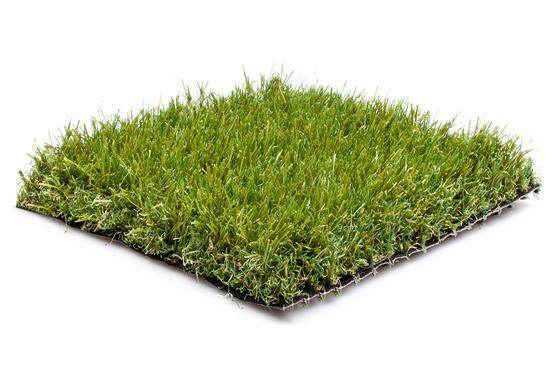
Pile height refers to the length of the individual grass fibres, typically measured from the backing to the tip of the yarn. It is often one of the first specifications buyers notice when comparing products.
Longer pile heights generally create a softer and more luxurious appearance. This can work well in hospitality environments, residential developments and show home landscaping where visual presentation is a priority.
However, taller is not always better.
A common misconception is that the highest pile automatically represents the highest quality product. In reality, the suitability of a pile height depends on how the surface will be used.
For example, a long-pile product may create an attractive appearance in a decorative courtyard, but a shorter pile could be more practical in areas exposed to regular foot traffic. Shorter fibres may offer greater stability and can sometimes maintain a tidier appearance in busy environments.
Commercial buyers should therefore view pile height as a specification choice rather than a quality ranking. The objective is to match the product to the project's requirements rather than simply selecting the tallest available option.
Density Shapes How Well the Grass Handles Footfall
Density often has a greater influence on long-term performance than pile height alone.
Density refers to the amount of yarn contained within the product. While manufacturers may measure this in different ways, denser products generally contain more fibres packed into the same area.
This can have a significant influence on how the surface responds to regular use.
A dense artificial grass product may provide greater fibre support, helping the grass maintain its appearance when exposed to repeated foot traffic. This is particularly relevant in commercial environments where surfaces are used consistently throughout the year.
|
Specification Factor |
Primary Influence |
|
Pile Height |
Appearance and feel |
|
Density |
Resilience and recovery |
|
Colour Blend |
Visual realism |
|
Backing Construction |
Structural stability |
Consider the difference between a school playground and a show garden. The show garden may prioritise visual impact, while the school environment is more likely to prioritise resilience and recovery under frequent use.
This is why density often deserves as much attention as pile height when comparing products. A moderate pile height combined with strong density may be more suitable than a longer pile with lower fibre support.
The Right Balance Improves Durability
Commercial performance depends on balancing pile height, density and intended usage.
No single specification determines how an artificial grass system will perform. Instead, different elements work together to create the overall surface characteristics.
A product with a taller pile may benefit from sufficient density to support the fibres effectively. Equally, a highly dense product may not always be necessary for lightly used decorative areas.
Commercial buyers often face two specification mistakes:
-
Over-specifying the product and paying for performance that the project does not require.
-
Under-specifying the product and creating avoidable maintenance or appearance issues later.
The most successful commercial projects start by assessing expected usage, footfall levels and aesthetic objectives before comparing specifications.
This approach often results in better value than selecting products based purely on visual appeal or headline specifications.
Pile Height Influences Comfort Underfoot
Different pile heights can create different underfoot experiences for users.
While durability is often a major commercial consideration, user comfort can also influence specification decisions.
Hospitality venues, leisure spaces and communal residential developments often place significant emphasis on how a surface feels underfoot. Longer pile products can sometimes create a softer feel that contributes to the overall user experience.
However, comfort should not be considered in isolation.
A surface that feels comfortable but does not suit expected usage patterns may not deliver the desired long-term result. Commercial buyers should balance comfort, durability and appearance when evaluating available artificial grass options.
This is particularly important in mixed-use environments where visual appeal and practical performance need to work together.
Density Helps the Surface Stay Upright for Longer

Well-constructed, dense products may maintain their appearance more effectively under regular use.
Density helps support individual grass fibres, reducing the likelihood of the surface appearing flattened following repeated foot traffic.
Commercial wear patterns rarely occur evenly. Entrances, pathways, seating areas and gathering spaces often experience greater use than surrounding sections of the landscape. These concentrated wear zones can place additional demands on the product.
Where durability is a significant project requirement, density often becomes an important specification consideration.
That does not mean every project requires the densest product available. Instead, buyers should assess whether the anticipated usage justifies a higher-density construction.
Matching specification to usage remains more important than selecting the highest specification in every category.
Product Performance Changes by Sector and Use
Different commercial environments place different demands on artificial grass systems.
For this reason, specification decisions should always reflect the intended use of the space.
For additional guidance on selecting suitable pile heights, see our guide to artificial grass pile height.
Schools and Nurseries
Educational environments often experience frequent daily use.
Durability, resilience and ease of maintenance are typically important considerations. Product selection may place greater emphasis on density and recovery characteristics than purely visual factors.
Hospitality and Leisure
Hotels, restaurants and leisure venues often prioritise appearance alongside performance.
In these settings, a balance between comfort, realism and durability is often desirable. Specification decisions frequently focus on creating an attractive environment without compromising practicality.
Housing Developments
Residential developments often require a combination of visual appeal and manageable maintenance requirements.
Developers may need to specify products suitable for show homes, communal spaces and shared gardens, each with different usage expectations.
Public Spaces
Publicly accessible environments can experience significant footfall throughout the year.
These projects often place greater emphasis on resilience, recovery and long-term appearance retention. Product specifications should reflect expected traffic levels rather than aesthetics alone.
Safety and Stability Depend on the Right Specification
The correct specification contributes to overall surface stability and user experience.
Artificial grass performance is influenced by the interaction between product construction, sub-base preparation and installation quality.
Pile height and density both play a role in how the finished surface behaves. However, these elements should be considered as part of the wider system rather than in isolation.
Some commercial projects may also evaluate shockpads and other installation components depending on the intended use of the area.
Early planning helps ensure specification decisions align with project requirements.
Maintenance Requirements Vary with Pile Height and Density
Maintenance expectations can differ depending on the construction of the artificial grass.
Artificial grass generally requires less routine intervention than natural turf, but it still benefits from ongoing care.
Maintenance activities may include:
-
Brushing fibres
-
Removing debris
-
Inspecting edges and joins
-
Monitoring high-use areas
Pile height and density can influence how the surface responds to these activities. Products with different constructions may require different levels of attention to maintain their intended appearance.
For commercial sites, establishing a realistic maintenance plan is often just as important as selecting the correct product.
Visual Quality Is Stronger with the Correct Construction
Visual performance depends on the combination of pile height, density, colour blend and product design.
Many buyers focus on pile height because it is easy to compare between products. However, visual realism is usually influenced by multiple factors working together.
Colour variation, fibre construction and density all contribute to the finished appearance.
A balanced specification can often create a more convincing and consistent result than focusing on any single characteristic alone.
For architects, developers and landscape designers, understanding these relationships can help improve product selection decisions and project outcomes.
Choosing Correctly Helps Avoid Premature Replacement
Matching specification to usage can help reduce performance issues and replacement costs.
Before selecting a product, consider:
-
Expected footfall levels
-
Primary users of the space
-
Visual objectives
-
Maintenance resources
-
Comfort requirements
-
Site conditions
-
Project budget
Commercial landscaping projects often achieve better outcomes when specification decisions are based on practical requirements rather than assumptions about quality.
A well-matched product is more likely to support project objectives than a specification chosen solely because it has the tallest pile height or highest density figure.
Pile height and density are two of the most influential factors in artificial grass specification, but neither should be viewed in isolation.
Pile height affects appearance and underfoot feel, while density often plays a major role in resilience and recovery. The most appropriate specification will depend on how the space is expected to perform and who will use it.
Whether you are designing a housing development, specifying a hospitality project or planning a high-use public space, matching the product to the environment is often the most important decision.
If you would like advice on selecting the right artificial grass specification for your project, speak with Tuda Grass. You can contact us to discuss your requirements and explore suitable options.
